
Life Blossoms Again: A Medulloblastoma Child Gets a New Lease on Life
A 9-year-old patient with medulloblastoma underwent individualized chemoradiotherapy and precise radiotherapy. The tumor significantly shrank, language and motor functions gradually recovered, follow-up indicators remained stable, and the child returned to school. This demonstrates the importance of standardized comprehensive treatment for rehabilitation of pediatric central nervous system tumors.
- Patient Xiaoye (pseudonym)
- From China
- Diagnosis Medulloblastoma of the fourth ventricle
- Treatment Craniospinal irradiation with TomoTherapy + CVP chemotherapy
- Follow-up 4+ years
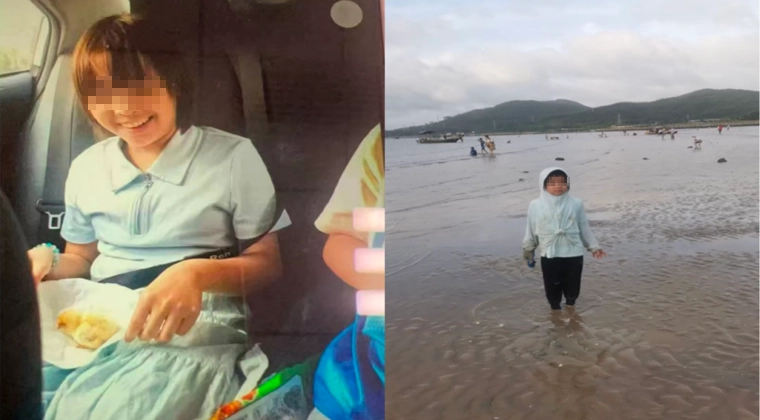
1. A Bolt from the Blue: The Headaches We Thought Were Part of Growing Up Turned Out to Be a Tumor
In the spring of 2023, Xiaoye was just nine years old.
Like any child her age, she should have been running and laughing at school. But that spring, she kept complaining of headaches. We thought it might be stress from school or problems with her eyesight, and even took her for an eye exam. It was not until she began walking unsteadily, speaking less, and becoming increasingly withdrawn that we realized something was seriously wrong.
On May 26, 2023, a head CT report shattered our last hope that it might be nothing serious: a mass was found posterior to the fourth ventricle, raising concern for a tumor.
That day, it felt as though our whole family’s world had gone dark.
2.Surgery, Radiation Therapy, and Chemotherapy: A Race Against Time
In June 2023, Xiaoye underwent three procedures: external ventricular drainage through a burr hole in the right frontal horn, resection of the fourth ventricular tumor, and placement of an intracranial pressure monitoring probe. The scars left on her small head seemed painfully out of place on a child so young.
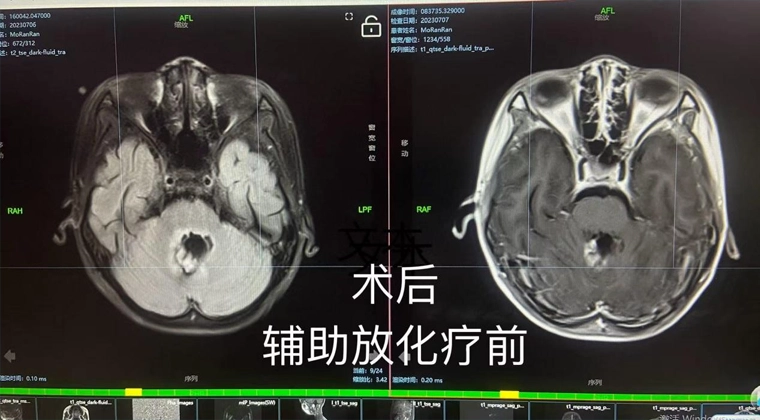
Postoperative pathology confirmed medulloblastoma.
Medulloblastoma is one of the most common malignant brain tumors in children. It grows rapidly and has a tendency to spread, making it important to begin craniospinal irradiation as soon as possible after surgery.
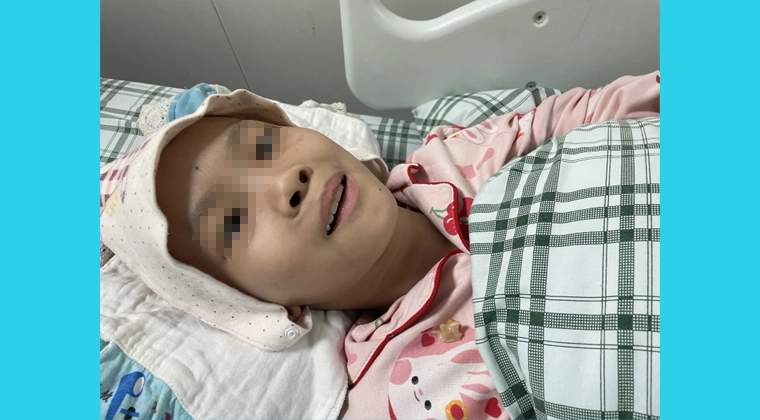
Photos 1 and 2. Before treatment at our hospital
In July 2023, Xiaoye’s parents eventually brought her to our hospital. A multidisciplinary team (MDT) consultation was promptly arranged. Specialists in neurosurgery, radiation oncology, radiology, and rehabilitation carefully reviewed her MRI scans, assessing residual tumor, the risk of spinal dissemination, and her age. Based on this comprehensive evaluation, the team developed an individualized TomoTherapy treatment plan for Xiaoye.
TomoTherapy can deliver craniospinal irradiation with continuous coverage of the entire brain and spinal cord, reducing the risk of gaps or overlaps that can occur with conventional techniques. Like a precision sculptor, it directs radiation to the target while sparing critical structures such as the hippocampus and inner ear, helping preserve the child’s memory and minimize the impact of treatment on her future growth and development.
For a nine-year-old child, however, every radiation therapy session was a challenge. Xiaoye had to remain completely still under intravenous anesthesia during treatment. After her fifth session, treatment had to be suspended because of a lung infection. It was not until September, after the infection had been brought under control, that radiation therapy could resume. Xiaoye ultimately completed all 22 sessions.
Before the side effects of radiation therapy had fully subsided, Xiaoye began a prolonged course of CVP chemotherapy in 2024 (cyclophosphamide + cisplatin + vincristine).
Seven cycles in all. Xiaoye endured nausea, vomiting, hair loss, and bone marrow suppression. Each cycle of chemotherapy was another difficult battle. Yet she was far stronger than we had imagined. She would often vomit with tears streaming down her face, but afterward, she would wipe her mouth and turn to reassure us: “I’m okay. I’ll feel better soon.”
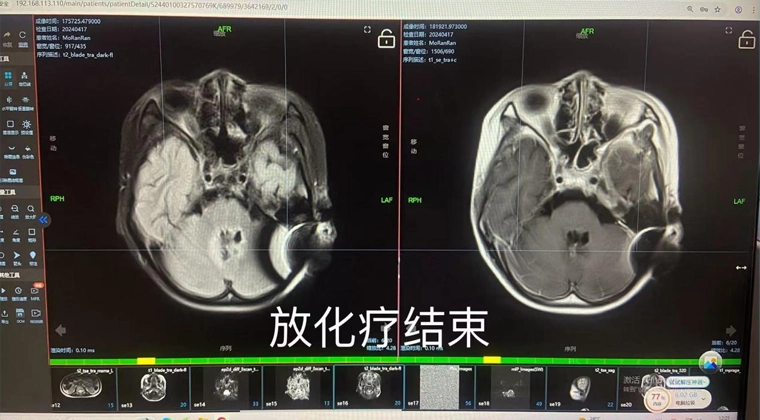
Photo 3. After completion of radiation therapy and chemotherapy at our hospital
3.The Long Road to Recovery: Step by Step Toward a Brighter Future
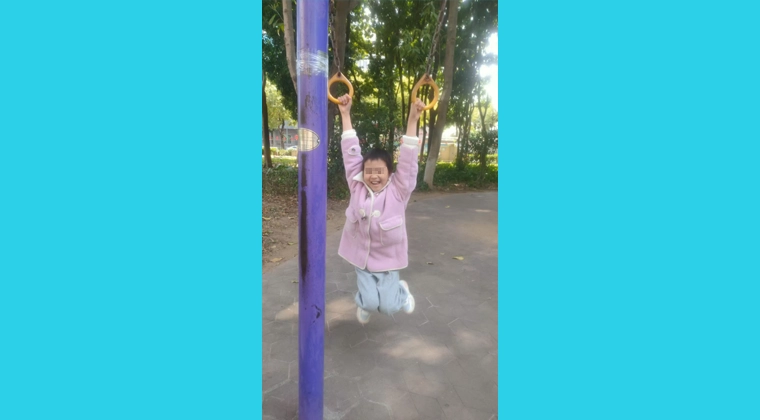
Given Xiaoye’s postoperative cerebellar dysfunction, right-sided limb weakness, and impaired balance, our rehabilitation team developed a structured, individualized rehabilitation program for her and provided guidance to her parents.
Day after day, Xiaoye practiced standing, taking steps, and maintaining her balance. In April 2025, she took her first step on her own, then a second, and a third. The child who had once been unable to stand because of right-sided weakness had learned to walk again! As her recovery progressed, she also became increasingly independent in daily life, dressing herself, washing up, and packing her own schoolbag.
Photo 4. Xiaoye playing on exercise equipment
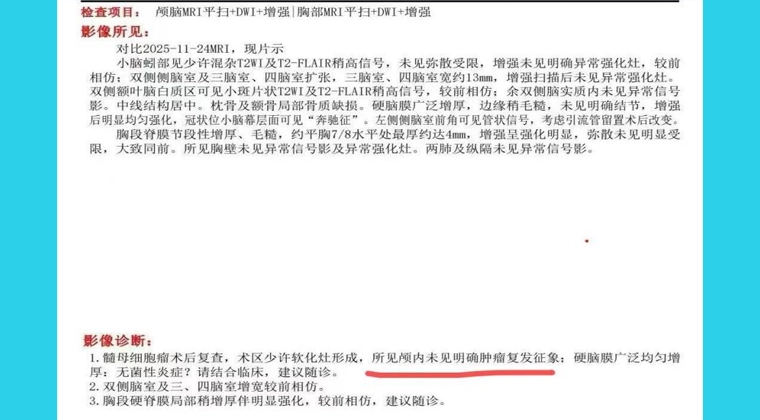
In February 2026, follow-up imaging showed stable findings with no evidence of tumor recurrence.
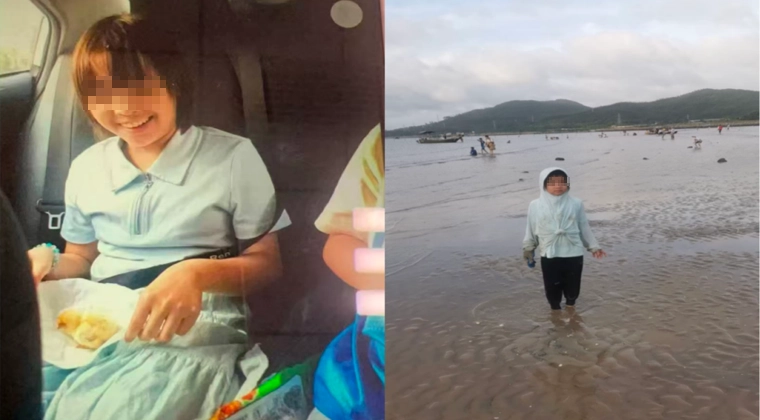
Photo 5. February 2026 follow-up: no evidence of tumor recurrence
Photo 6. Xiaoye has now returned to her normal life
Today, Xiaoye can eat, dress herself, walk, and play just like other children. She has not yet fully returned to how she was before her illness, but she is getting better every day.
“Three years ago, our greatest fear was that she might never be able to stand again. Three years later, she runs ahead of us, turns around, and calls out, ‘Come on, hurry up!’ There is still a long road ahead, but as we watch her move forward, step by step, we have come to realize that even the hardest road grows brighter as you keep going.”
This record is shared with the patient's consent. Names may have been changed to protect privacy, and individual outcomes vary from person to person.